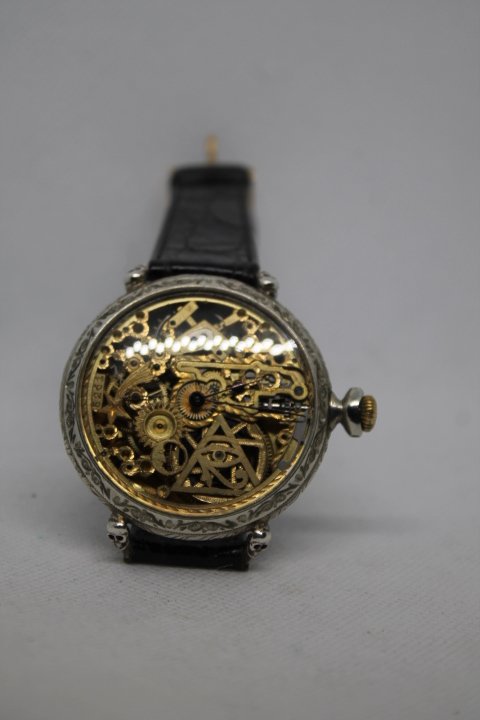
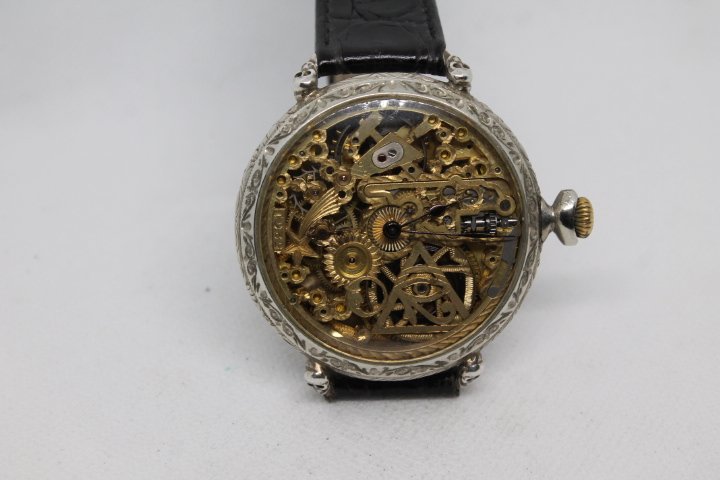
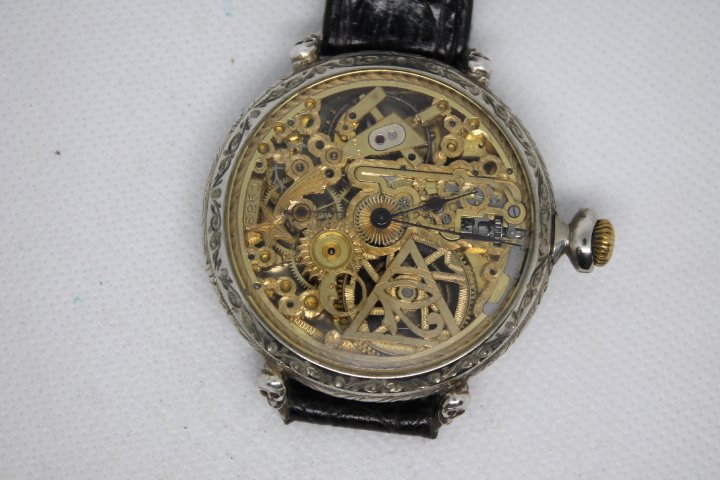
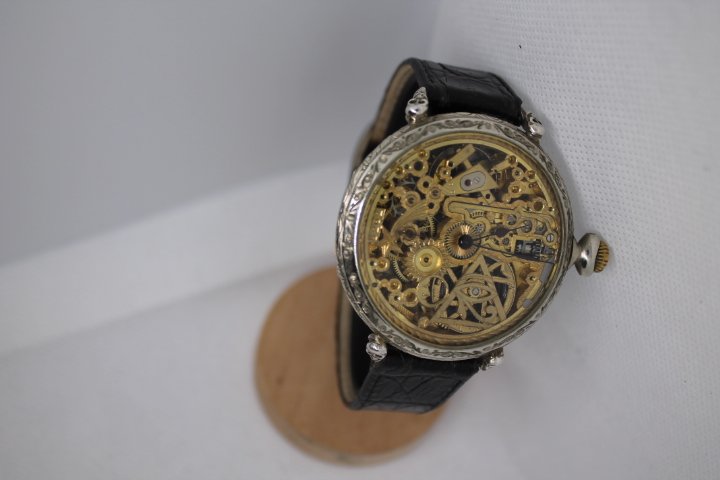
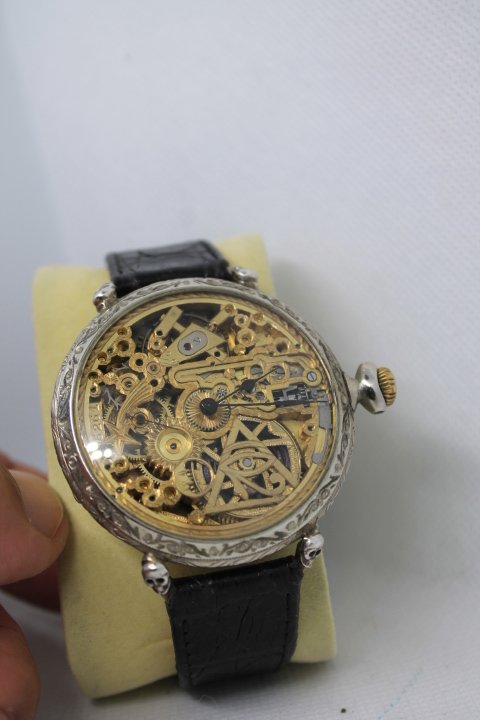
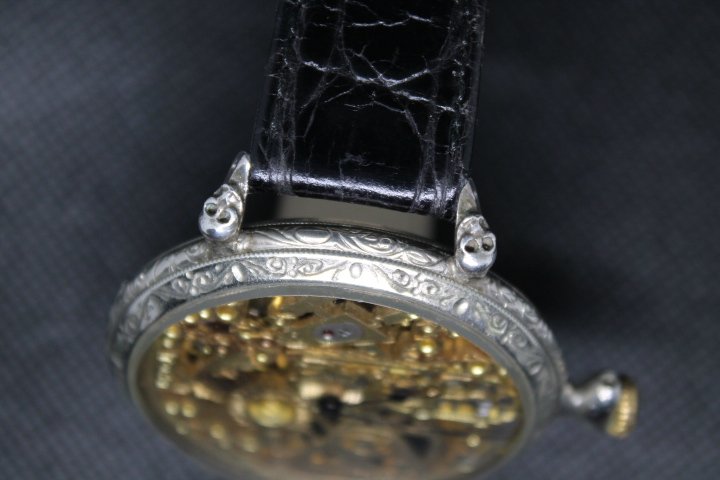
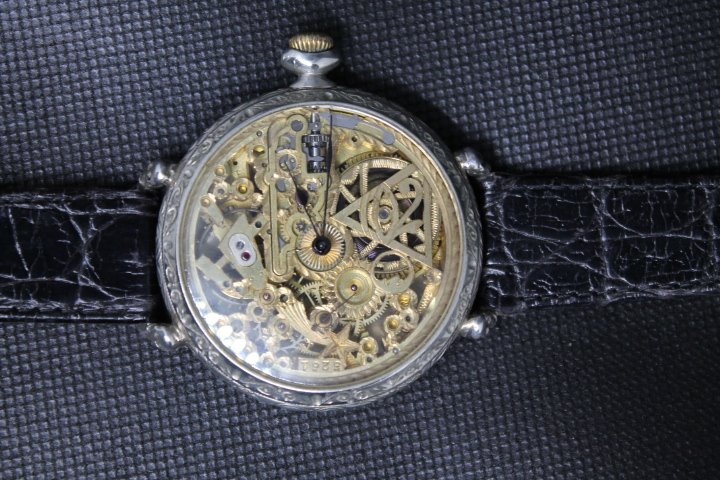
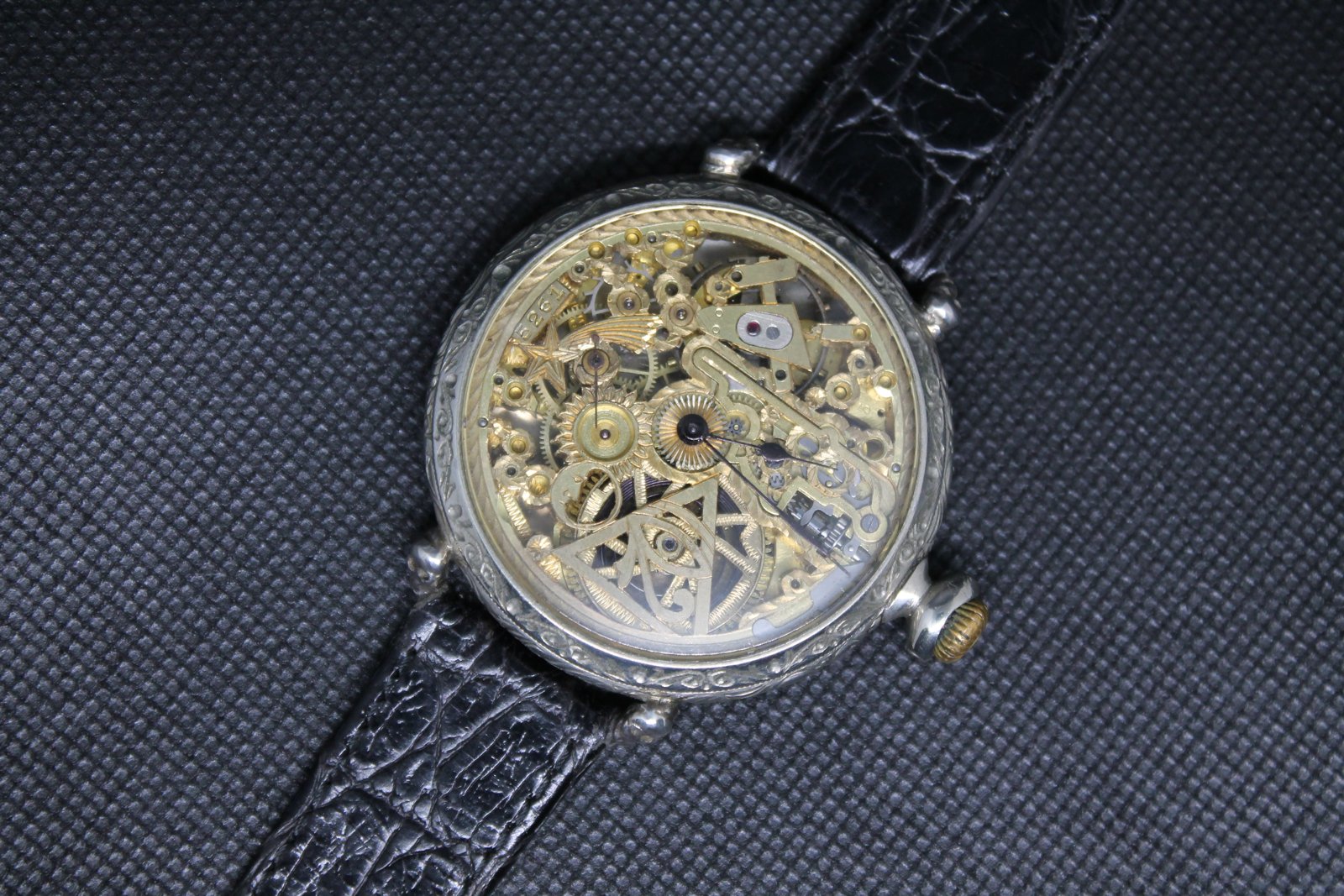
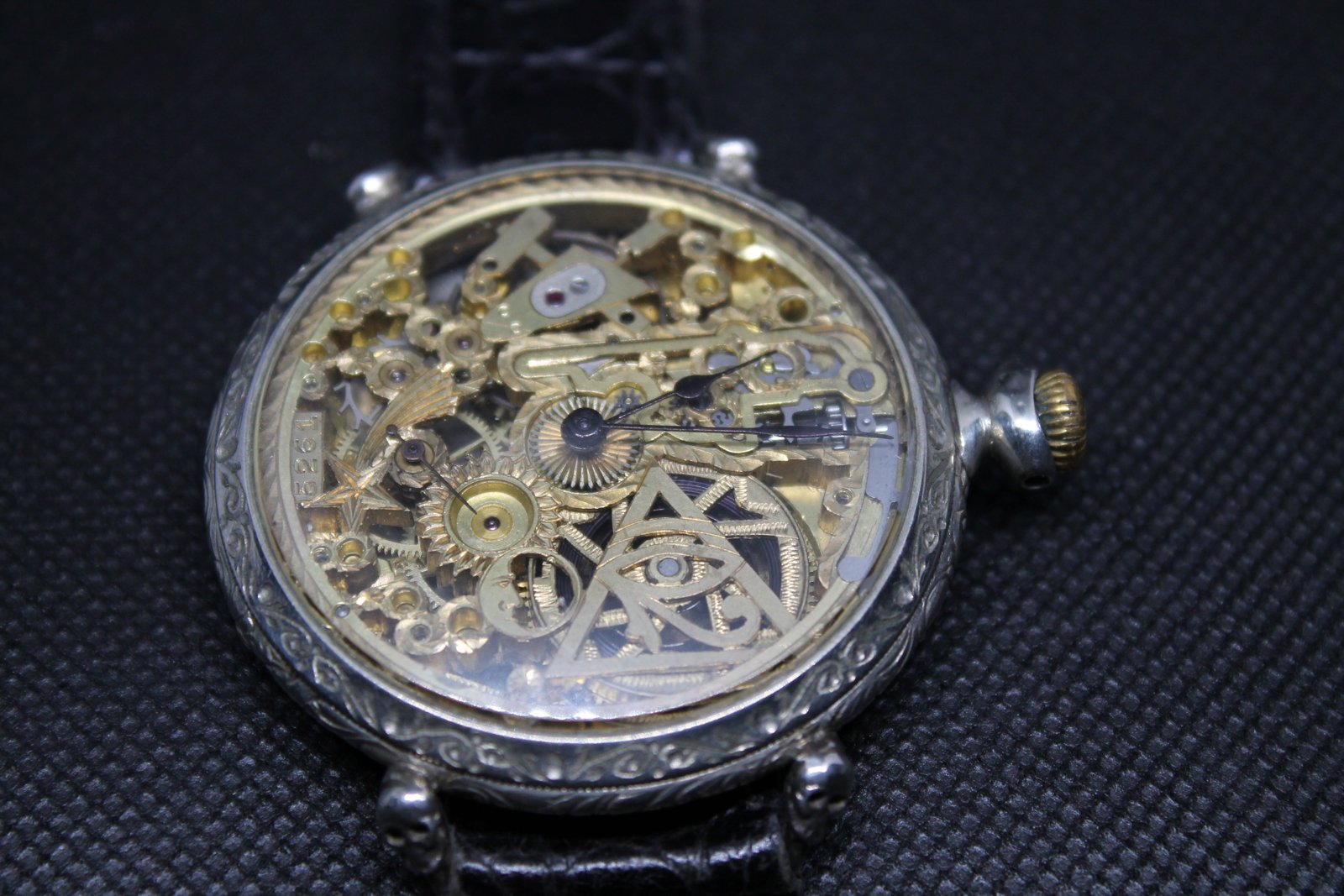
This Zenith belongs to a particular family of watches: those born as pocket watches and converted into wristwatches. In the early twentieth century the pocket watch, worn on a chain, was still the norm; with the Great War needs changed and the wrist format, more practical to consult, quickly prevailed. Many watchmakers then adapted existing pocket watches, modifying the case, adding lugs for the strap and working on the crystal and crown.
The skeletonisation
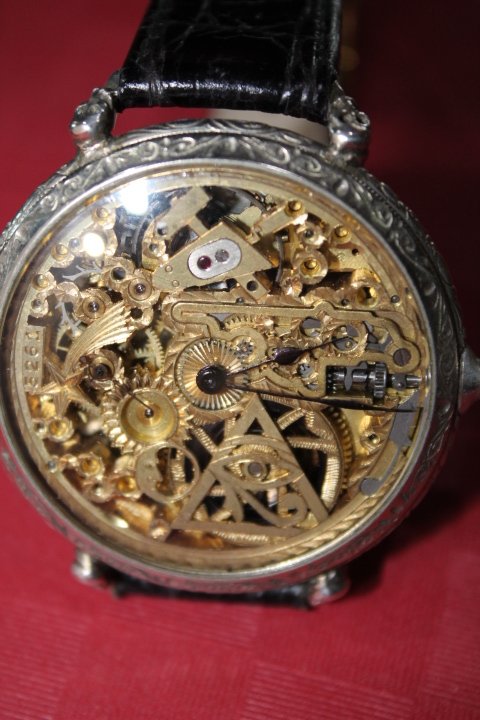
In this example the conversion is joined by the skeletonisation of the movement, carried out by the Frenchman Dutj, one of the most imaginative engravers of his time. The work was commissioned by a family with a Masonic tradition, who asked for certain symbols representing it to be included in concealed form. Looking closely at the parts of the movement, lightened and engraved, one finds the eye in the triangle, the hammer, the comet, the sun and the moon.
For the collector
Every converted watch is by definition different from the others, as it depends on the original case and on the choices of whoever adapted it. Here that uniqueness is joined by the quality of the skeletonisation and by a private commission that can be read in the movement itself: an object halfway between watchmaking and the art of engraving, with a value that goes beyond mechanics alone.
Technical details
| Brand | Zenith |
|---|---|
| Model | Pocket watch converted to wristwatch, skeletonised movement |
| Case | Stainless steel |
| Dimensions | 48 mm |
| Period | 1920s-1930s |
| Functions | Hours, minutes |
| Crystal | Mineral |
| Strap | Leather |